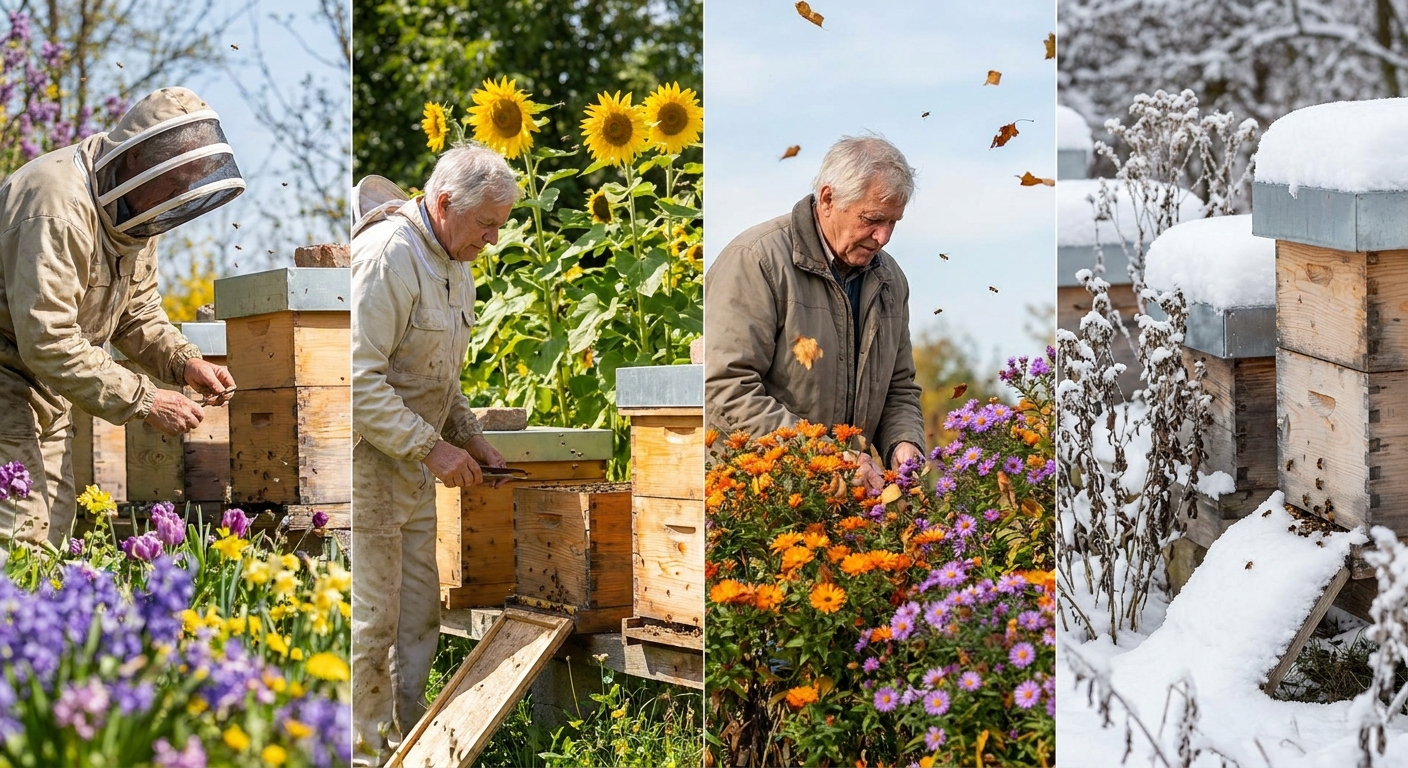
If you keep bees for any length of time, you quickly notice a pattern: the hive booms when forage is steady and stalls (or even shrinks) when nectar dries up. A well-planned pollinator garden isn’t just decoration—it’s your bees’ backup pantry, health clinic, and navigation beacon all in one.
Why Your Bees Need More Than a Pretty Garden
In a world of clipped lawns and mono-culture fields, your yard can become a small but mighty refuge. Done right, a pollinator garden will:
- Smooth out nectar and pollen gaps through the seasons
- Support honeybee health with diverse nutrition
- Offer food and habitat for native pollinators, too
- Make hive inspections easier by keeping bees calmer and better fed
This guide walks through how to plan, plant, and manage a pollinator garden that genuinely supports your bees, season by season.
Start With the Bees: Understanding What They Need
Before you buy a single plant, it helps to think like a bee.
Honeybee Foraging Basics
- Range: A strong colony can forage up to 2–3 miles, but nearby forage is far more energy-efficient.
- Preferences: Bees love clusters of the same flower; a single lavender plant is a snack, a 10-foot patch is a buffet.
- Timing: Bees need a steady supply of nectar (carbs) and pollen (protein) from early spring through late fall.
What a Colony Needs Through the Year
- Early spring: Pollen to raise brood, light nectar to grow the workforce.
- Late spring–early summer: Heavy nectar flows to build stores and draw comb.
- Late summer: Drought and dearth often hit; varied pollen and nectar are critical.
- Fall: Nectar/pollen to raise fat, long-lived winter bees and top off stores.
Your pollinator garden should be planned around these needs.
Step 1: Plan for Continuous Bloom
Aim for overlapping bloom times so something is always flowering.
Early Spring (Wake-Up Fuel)
Look for cold-tolerant, early bloomers:
- Crocus
- Snowdrops
- Grape hyacinth
- Willow (pussy willow in particular)
- Wild mustards and dandelions (yes, leave some!)
Beekeeper’s tip: When you see pollen of many colors (cream, yellow, orange) coming in on their legs, it’s a sign brood rearing is underway. Your early-blooming garden plants are helping.
Late Spring to Mid-Summer (Main Flow)
This is the engine of your apiary. Think volume and variety:
- Clover (white, crimson, and alsike)
- Black locust
- Basswood/linden
- Catmint and lavender
- Salvia
- Bee balm (Monarda)
- Borage
Hive inspection cue: During strong bloom, hives feel “heavy” when you tip them from the back. You’ll see white wax cappings on new honey, and they may start building comb wherever they can. Your garden is likely part of that surge.
Late Summer (The Dearth Buffer)
When wild forage dries up, gardens can carry colonies through:
- Anise hyssop
- Sunflowers
- Zinnias
- Cosmos
- Russian sage
- Coneflowers
- Oregano, thyme, and other herbs allowed to bloom
Warning sign: During dearth, testiness can spike. If your bees suddenly feel more defensive at inspections, look around—are flowers scarce? Expanding late-summer bloom often helps calm things down.
Fall (Winter-Bee Builder)
Fall forage helps raise well-fed winter bees:
- Asters
- Goldenrod (a major bee favorite, despite the allergy rumors)
- Sedum ‘Autumn Joy’ and similar
- Late-blooming sunflowers
Hive focus: During fall inspections, look for healthy brood patterns and some fresh pollen near the brood nest. Your autumn blooms are part of that picture.
Step 2: Layer Your Garden Like a Habitat, Not a Display
Rather than scattering a few plants here and there, think in layers and patches.
The Three-Layer Approach
Trees & Shrubs (High-Impact Bloom)
- Willows, maples, basswood, fruit trees, serviceberry, elderberry, butterfly bush - These provide huge amounts of nectar and pollen in a short window.
Perennials (Reliable Workhorses)
- Coneflower, bee balm, black-eyed Susan, yarrow, lavender, salvia, agastache, penstemon - Once established, these return every year and often expand.
Annuals & Self-Seeders (Flexible Fillers)
- Borage, cosmos, zinnias, calendula, sunflowers, phacelia - Great for quickly filling in gaps and extending bloom.
Plant in Drifts, Not Dots
Bees prefer clumps of the same flower. Instead of one bee balm here and one there, plant 3–7 of the same plant together. You get better visual impact and better foraging efficiency.
Step 3: Make It Safe—No Hidden Poisons
A pollinator garden that’s been treated with systemic pesticides is a trap, not a haven.
- Avoid neonicotinoids: Check plant labels and ask garden centers if plants are neonic-free.
- Skip “bug killers” marketed as long-lasting or applied to soil around plants.
- Use hand-picking, strong water spray, row covers, and selective pruning for pests.
Beekeeper’s check: If you see piles of dead or twitching bees near the hive entrance, especially during strong bloom, consider whether nearby plants may have been treated. A safe pollinator garden right next to your hives helps buffer some external risks.
Seasonal Garden Care Paired With Hive Checks
Tie your garden work to your hive routine so both stay on track.
Early Spring
In the garden:
- Leave last year’s hollow stems and leaf litter until temperatures stay above ~50°F; many beneficial insects overwinter there.
- Add a thin layer of compost instead of heavy tilling.
- Quick top checks on warmer days: do they still have food? Are bees flying on sunny afternoons?
- Watch for pollen pants—those colored pollen loads tell you early flowers are working.
At the hive:
Late Spring
In the garden:
- Thin or divide perennials if overcrowded; replant divisions to expand bee forage.
- Succession-sow annuals like borage and phacelia every few weeks.
- Full inspections: look for solid brood patterns and enough room for nectar.
- If your bees are booming and your garden is packed with bloom, be proactive about adding supers or splitting colonies to prevent swarming.
At the hive:
Summer Dearth
In the garden:
- Deep, infrequent watering to help nectar plants keep producing.
- Deadhead annuals like zinnias and cosmos to encourage more flowers.
- Check for signs of robbing and heightened defensiveness.
- Evaluate food reserves: if frames feel light and your garden is between blooms, consider light feeding until more flowers open.
At the hive:
Fall
In the garden:
- Resist the urge to cut everything down. Leave seed heads and stems for birds and overwintering insects.
- Plant fall-blooming perennials and spring-blooming bulbs.
- Check for good weight and visible pollen stores.
- Confirm queenright status and decent brood pattern—your fall flowers are feeding those crucial winter bees.
At the hive:
Gentle Troubleshooting: When Bees and Garden Don’t Match
Lots of Flowers, Few Bees
Possible causes:
- Competing mass forage nearby (fields, neighbor’s trees)
- Windy or shaded placement making foraging less efficient
- Plant choices that look good but offer little nectar
Try:
- Adding more known nectar producers (borage, clover, bee balm).
- Creating windbreaks or shifting main patches to sunnier spots.
Bees Seem Cranky Around the Garden
- Bees are sensitive to vibrations and scents. Gas-powered trimmers or strong perfumes can set them off.
- Work in the garden during cooler mornings or evenings when foraging is light.
- Wear light-colored clothing and move calmly.
If mood shifts dramatically from one week to the next, inspect the hive: lack of food, queen loss, or robbing can all increase defensiveness.
Garden Thriving, Honey Production Still Low
Your garden may be providing daily nutrition, but large honey crops often depend on big trees and fields. Your pollinator garden’s main job may be:
- Filling in nectar gaps
- Boosting colony health and resilience
- Supporting brood rearing
Healthy bees are the real goal; full supers are the bonus.
A Backyard That Works as Hard as Your Bees
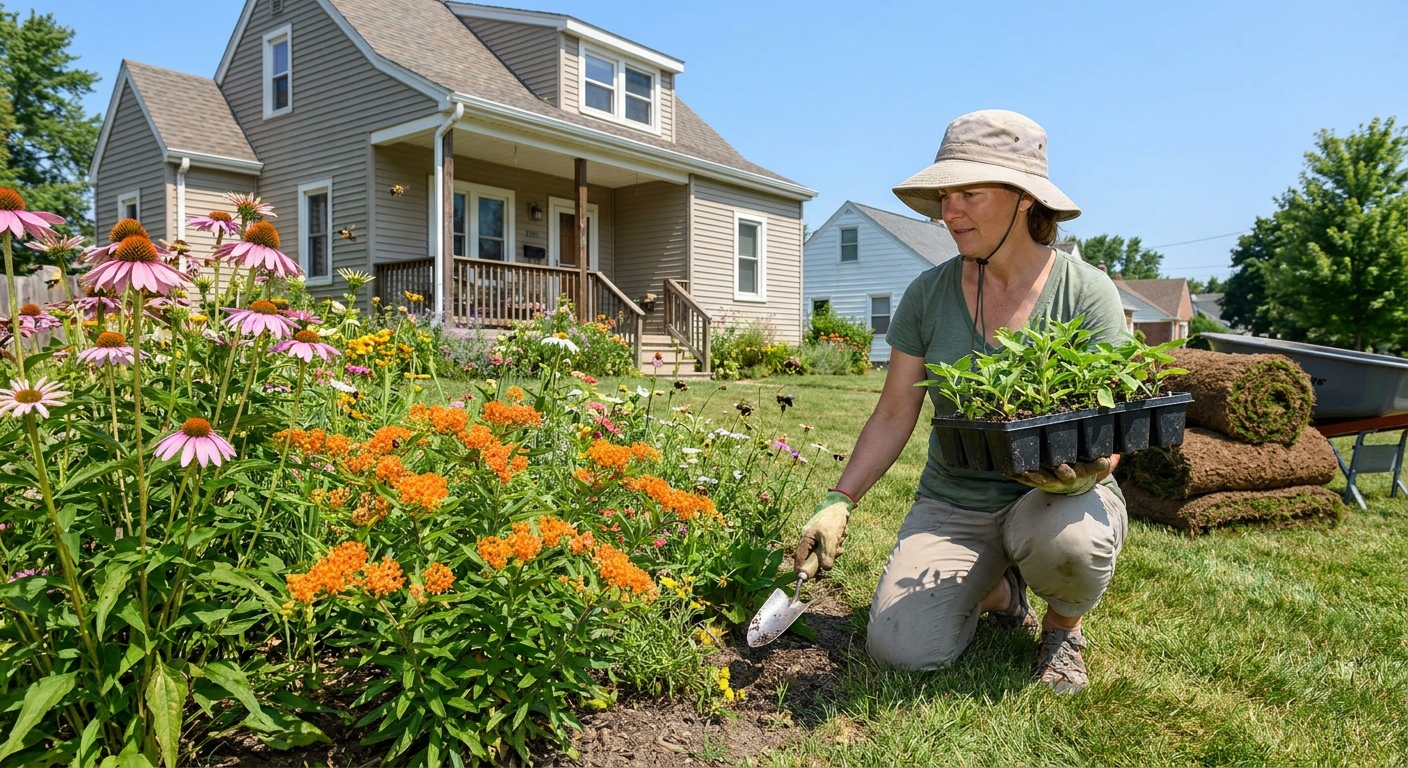
A thoughtful pollinator garden shifts your yard from a passive space into an active partner for your hives. With layered planting, continuous bloom, and chemical-free care, you’re not just decorating—you’re feeding, sheltering, and stabilizing your colonies.
Start with one sunny patch this season. Watch which flowers your bees choose first. Let their flight paths, pollen colors, and hive weight guide your plant choices year by year. In time, your “garden” becomes an extended, living part of the apiary—busy, varied, and humming right along with your bees.