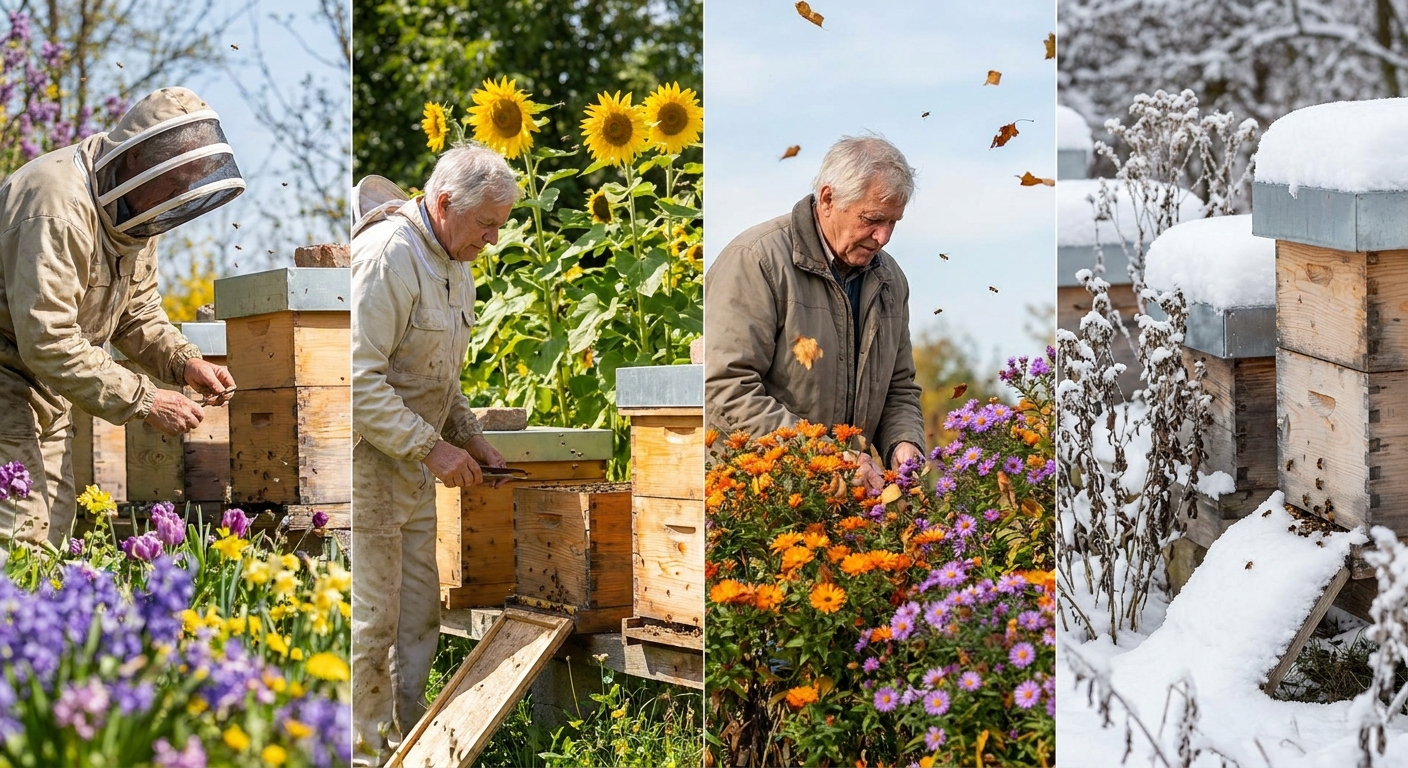
Beekeeping is deeply seasonal. Your bees shift gears from survival to buildup, from honey-making to winter prep. A good pollinator garden should move through those same rhythms, supporting your colonies when they need it most.
A Garden That Works on the Same Schedule as Your Hive
This playbook walks month-by-month through the gardening tasks, bee biology, and hive checks that fit together. Use it as a flexible template and adjust the timing for your climate.
Late Winter: Setting the Stage
Even before you see bees flying, your planning can make a difference.
In the Garden
- Plan for early bloom: Choose bulbs and shrubs that flower as soon as the soil thaws.
- Order seeds: Prioritize a mix of annuals and perennials with staggered bloom times.
- Skip the spring “clean-up” urge: Many beneficial insects are still in last year’s stems and leaves.
Good early plants to have queued up:
- Crocus, snowdrops, grape hyacinth
- Willow, maple, hazel
- Hellebore
In the Hive
Inside the hive, the queen may start laying on warmer stretches.
- Quick top checks only: On mild, calm days, pop the lid to check food reserves.
- Heft the hive: Lift from the back. If it feels alarmingly light, consider emergency feeding.
Biology note: As days lengthen, brood rearing ramps up. That means higher nutritional needs just as natural forage is still scarce. Your early-blooming garden plants will soon help catch this gap.
Early Spring: First Flights and First Flowers
Those first sunny 50°F days are a turning point.
Garden Tasks
- Watch for early bulbs you planted: crocus, snowdrops, and grape hyacinth often attract the first foragers.
- Let dandelions and other early “weeds” bloom; they’re valuable pollen sources.
- Top-dress perennials with compost; avoid synthetic fertilizers, which can alter nectar or push weak, pest-prone growth.
Hive Inspections
On a calm, mild day:
- Do your first quick frame-level check of the year.
- Look for:
- Brood pattern: Even, solid patches of brood suggest a healthy queen and good nutrition.
- Pollen stores: Yellow, orange, or cream bands near brood are a good sign.
If you see mostly scattered brood and no fresh pollen, your bees may be running on fumes. That’s your cue to:
- Encourage early-flowering plants close to the apiary next season.
- Supplement carefully now if needed.
Mid to Late Spring: Build-Up and Bloom Explosion
This is when a pollinator garden really hits its stride.
Garden Focus
Aim for big, obvious patches of bloom:
- Clover in lawn areas
- Catmint, lavender, and salvias along paths
- Fruit trees, serviceberry, and ornamental crabapples
Plant in clusters so returning foragers can work efficiently.
Watering: Deep water during dry spells; flowers under drought stress may yield less nectar.
Hive Focus
Colonies are often booming now.
- Inspect every 7–10 days in strong bloom.
- Look for:
- Rapidly growing brood nest supported by your garden’s pollen flow.
- White new wax and incoming nectar.
- Crowding or queen cells (swarm prep).
Practical tie-in:
- If you see the brood nest packed and bees hanging outside, ask: is your garden providing heavy bloom? Combine that insight with regional flows to time when you add supers or make splits.
Early Summer: Nectar Flow and Honey-Making
This is the main honey-making season in many regions.
Garden Tasks
Keep the buffet open:
- Deadhead spent blooms on annuals like cosmos and calendula to keep them flowering.
- Stagger sowing for reseeding annuals (borage, phacelia, zinnias) every couple of weeks.
- If you have space, plant a strip of sunflowers—they can bridge late-summer gaps.
Ensure pesticide-free conditions:
- Avoid treating nearby ornamentals, lawns, or vegetables with systemic insecticides.
- If you must treat for a severe pest, use targeted methods at dusk, when bees aren’t foraging, and avoid open blooms.
Hive Inspections
You’re now checking for:
- Honey supers filling with nectar
- Properly capped honey frames
- Space for nectar storage
Biology note: Heavy nectar inflow triggers wax production—young worker bees secrete wax and build comb. Diverse nectar from your garden can influence honey color and flavor.
If your supers are barely filling while your garden is packed with bloom, consider:
- Are other major nectar sources lacking in your area?
- Is the colony population strong enough?
- Is the queen laying well, supported by enough pollen?
Your garden provides nutrition, but total honey yield depends on both forage scale and colony strength.
Late Summer: Surviving the Dearth
In many regions, late summer is tough: the landscape dries out and nectar stops.
Garden as a Lifeline
This is where a well-planned pollinator garden shines:
- Lean on drought-tolerant nectar plants like:
- Anise hyssop (agastache)
- Russian sage
- Coneflowers
- Oregano, thyme, and mint allowed to bloom
- Keep watering deeply but infrequently to encourage strong roots and continued bloom.
Behavior at the Hive
Signs you’ve hit a dearth:
- Bees get more defensive and inspect you closely during hive checks.
- Robbing behavior may appear—bees fighting at the entrance, bees from multiple colonies milling.
If your garden is providing at least some nectar:
- You may notice slightly more manageable temperaments.
- Watch for lighter honey frames; don’t harvest aggressively.
Troubleshooting: If bees are unusually cranky despite good bloom nearby, inspect for other stressors: varroa levels, queen issues, or signs of pesticide exposure.
Early Fall: Building Winter Bees
As days shorten, your colony starts to raise a different type of worker: winter bees—fat-bodied bees designed to live for months rather than weeks.
Fall Garden Priorities
- Ensure ample late bloom:
- Asters
- Goldenrod
- Sedums
- Late sunflowers
- Plant fall-blooming perennials and spring-blooming bulbs now.
- Minimize major disturbances; avoid ripping out entire beds until after hard frosts.
These flowers provide the last pulses of nectar and pollen needed to:
- Build up winter stores
- Nourish winter bees
Hive Inspections
This is a critical check-in.
- Look for:
- A still-healthy brood pattern, though the brood area may be shrinking.
- Fresh pollen near brood—your fall flowers in action.
- Sufficient honey stores for winter.
Biology note: The quality of nectar and pollen in fall directly influences the health and longevity of winter bees. This is where your pollinator garden pays off in survival, not just surplus honey.
Late Fall to Early Winter: Rest and Habitat
As temperatures drop, your bees cluster, and your garden goes quiet above ground.
Garden Care With Pollinators in Mind
- Leave seed heads on coneflowers, sunflowers, and grasses for birds.
- Keep hollow stems standing; many solitary bees and beneficial insects overwinter inside.
- Rake leaves gently into beds instead of removing them—leaf litter shelters countless organisms.
You’re not just gardening for honeybees; you’re building an entire layered ecosystem that supports them indirectly.
Hive Care
- Avoid breaking the cluster with invasive inspections.
- Secure the hive from wind, pests, and moisture.
- Periodically check for physical damage, but leave the interior alone in cold weather.
Your garden may look dormant, but its roots are storing energy for next year’s forage.
Matching Plants to Bee Biology: A Short Reference
When choosing what to plant, tie it directly to what’s happening inside the hive.
Pollen-Rich Plants for Brood Rearing
Useful in early spring and fall:
- Willows, maples
- Dandelion
- Crocus
- Asters and goldenrod
Healthy brood patterns depend on good protein intake. Sparse or pale brood may hint that pollen is lacking.
Nectar-Heavy Plants for Honey Storage
Best in late spring and early summer:
- Clover
- Basswood/linden
- Black locust
- Phacelia
- Bee balm
In strong flows, you’ll see frames quickly fill with glistening nectar and bees fanning at the entrance to evaporate moisture.
Drought-Tolerant “Insurance” Plants
Key for late summer dearth:
- Anise hyssop
- Coneflower
- Russian sage
- Oregano, thyme, and mint
Think of these as your safety net when the wider landscape browns out.
Gentle Troubleshooting: Reading Garden and Hive Together
Issue 1: Patchy Brood and Weak Colonies
Check:
- Are there abundant, diverse pollen sources within easy flight distance?
- Do you see bees bringing in varied pollen colors?
Adjust:
- Add more pollen-rich perennials around the apiary.
- Encourage early and late bloomers specifically for brood-support windows.
Issue 2: Robbing and Aggressive Behavior
Ask:
- Has the local forage crashed (no bloom in the neighborhood)?
- Is your garden too small to support multiple colonies in a dearth?
Adjust:
- Increase late-summer and fall forage.
- Reduce hive entrances and avoid unnecessary open-feeding of syrup.
Issue 3: Beautiful Garden, Few Bee Visits
Consider:
- Are your plants truly nectar/pollen rich or just ornamental showpieces?
- Are they double-flowered varieties that hide or reduce nectar?
Adjust:
- Focus on simpler, open blooms.
- Choose proven bee favorites (borage, clover, salvia, thyme, etc.).
Let the Bees Help You Garden
Over time, your best teacher will be your bees themselves.
- Notice which plants they mob on sunny days.
- Track when your hives feel heavy versus light.
- Note mood shifts at inspections and what’s blooming—or not—around you.
Each season, tweak your planting list using that feedback. Slowly, your yard becomes more than a pretty space; it becomes a functional, living extension of your apiary—tuned to honeybee biology, grounded in observation, and kind to every pollinator who drops by.
Beekeeping is never fully under our control, but a well-designed pollinator garden is one place where your effort reliably pays off, year after year.