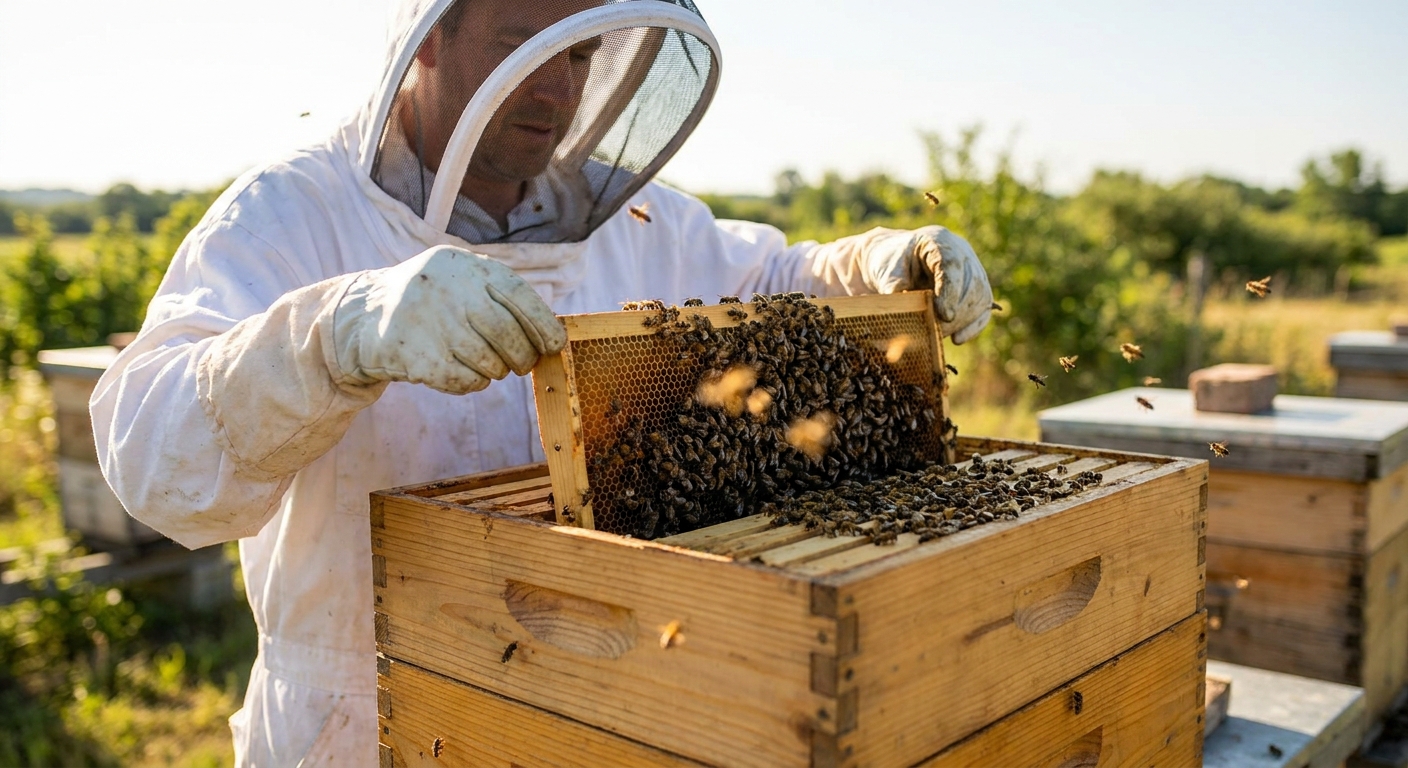
Stand beside a hive for a few quiet minutes and your bees will tell you more than you think—without you lifting a single frame. The hum, the flight patterns, the smell of warm wax and nectar: these are all health indicators backyard beekeepers can learn to read.
Learning to “Read” Your Bees
This guide walks through how to assess bee health using what you can see, feel, and smell, then connects those clues to what’s happening inside the colony: the queen, brood, workers, and their microscopic enemies.
The Healthy Hive, from the Outside In
Before we talk problems, let’s anchor what “healthy” looks like.
At the Entrance
Signs of a thriving colony:
- Steady but not frantic traffic: Bees coming and going in a calm stream.
- Pollen pants: Foragers returning with pollen in a variety of colors—cream, yellow, orange, even blue or red depending on flowers.
- Guards at the door: A few bees facing outward, occasionally checking incoming bees.
- Mild, warm scent: Nectar, wax, and a hint of propolis; not sour or foul.
What to watch for:
- Bees wrestling or tumbling at the entrance (could mean robbing)
- Bees crawling on the ground, unable to fly (possible disease, pesticide exposure, or deformed wings)
Inside the Hive: A Quick Health Checklist
When you open the hive, look for:
Brood in all stages – eggs, larvae, capped brood
Solid brood pattern – few random empty cells in the middle
Plenty of nurse bees on brood frames – a fuzzy “blanket” of young bees
Honey and pollen near brood – food within a few inches of babies
Calm behavior – bees stay on frames instead of boiling off
If most of these are true, your colony is likely in good shape.
Understanding the Bee Castes: Why Their Health Looks Different
Honeybee health isn’t just about individual bees—it’s about how queens, workers, and drones work together.
The Queen: Heart of the Colony
A healthy queen should:
- Lay a tight pattern: Brood should look like a solid oval of capped cells, not scattered.
- Lay worker brood primarily: Too many drone cells in the brood nest (big, domed caps) can signal queen problems.
- Be present or at least “visible” through her eggs: You don’t have to see her every visit, but you should see eggs.
Clues of queen issues:
- No eggs or young larvae
- Multiple eggs per cell or eggs on cell walls (often laying workers, not a queen)
- Very spotty brood or only drone brood
Worker Bees: The Colony’s Workforce
Healthy workers:
- Have even, intact wings and bodies
- Move with purpose; they may be busy, but not frantic
- Don’t cluster aimlessly on the ground or top bars
Unhealthy worker signs:
- Deformed wings: Crumpled, shortened, or twisted wings often signal heavy Varroa mite and virus load.
- Greasy-looking, hairless bees: Can indicate chronic bee paralysis virus (CBPV).
- Uncoordinated crawling bees: May point to diseases, poisoning, or severe stress.
Drones: The Colony’s Gentle Giants
Drones are the big, wide-eyed males. In a healthy colony:
- You’ll see more drones in spring and early summer.
- Numbers taper in late summer/fall; drones may be evicted before winter.
Excessive drones in the middle of the brood nest—especially in worker-sized cells—can hint that:
- The queen is failing or poorly mated
- The colony is queenless and has laying workers
Common Hive Health Scenarios and How to Respond
Let’s walk through real-life scenes you might find in your backyard apiary—and how to respond calmly.
Scenario 1: Busy Entrance but No Brood Inside
You open the hive and find:
- Lots of bees
- Honey and pollen present
- No eggs, larvae, or capped brood
Likely issue: Queenless or a failing queen.
What to do:
- Look carefully for emergency queen cells on the faces of brood frames (if any brood remains) or older queen cups.
- Check dates: If they recently swarmed or you installed a new queen, they may still be in the process of requeening. It can take 3–4 weeks from queen cell to new eggs.
If there’s no sign of requeening and it’s still a good season to raise/buy a queen:
- Add a frame of fresh eggs from another hive (if available) to give them a chance to raise a queen. - Or introduce a purchased mated queen following proper introduction steps.
Stay patient; avoid repeatedly disturbing a colony that’s in the middle of requeening.
Scenario 2: Patchy, Spotty Brood Pattern
You see:
- Many empty cells scattered within the brood area
- Some larvae, some capped brood, but it looks uneven
Possible causes:
- A queen nearing the end of her productive life
- Chilled brood (cold snapped after brood was laid)
- Brood disease (European foulbrood, chalkbrood, American foulbrood)
Quick checks:
- Look at the larvae: Are they pearly white and plump, or yellowish/brown, twisted, or melted-looking?
- Smell the brood nest: A sour or foul smell can be a red flag, especially for American foulbrood.
What to do (gently):
- If larvae look healthy and there’s no smell, monitor over the next 1–2 inspections. Consider requeening if the pattern doesn’t improve.
- If you suspect foulbrood or another serious disease, contact a local inspector or experienced beekeeper; some diseases require strong measures.
Scenario 3: Deformed Wings and Shrinking Population
You notice:
- Some bees with small, crumpled wings crawling on frames or the ground
- Overall population seems smaller than expected
Likely issue: Deformed Wing Virus (DWV) linked to high Varroa mite load.
What to do:
- Perform a mite count (alcohol wash or sugar roll) as soon as possible.
- If counts are above your local threshold, treat promptly with a product suited to your season and conditions.
- Long-term, commit to a mite management plan: scheduled checks and timely treatments, not just emergency reactions.
Be gentle with yourself here: many beekeepers only truly grasp the importance of Varroa control after facing this exact situation.
Scenario 4: Lots of Honey, Very Few Bees
Opening the hive, you find:
- Heavy honey frames
- A very small cluster of bees
- Little or no brood
Likely causes:
- The colony is in decline due to past mite issues or queen failure.
- It may be too far gone to recover on its own.
What to do:
- If season and local rules allow, combine the small colony with a stronger, healthy hive using the newspaper method.
- Make sure both colonies appear free of serious disease before combining.
This salvages bees and resources instead of watching a tiny colony fade out.
Subtle Signs You’re Doing Things Right
It’s easy to focus on problems, but pay attention to the many quiet signs of good bee health.
You’re likely on track if:
- Propolis fingerprints: The hive has a pleasant, resinous smell and sticky propolis in cracks. Bees are actively managing their own hive hygiene.
- New white wax: Fresh, snow-white comb being drawn is a sign of a colony with energy and resources.
- Bees fan at the entrance on warm evenings: They’re regulating hive temperature and moisture.
- Calm inspections: Bees stay relatively composed during short, gentle inspections.
These positives are just as meaningful as any problem you might catch early.
Simple, Low-Stress Hive Inspection Flow
Here’s a practical routine to assess health without overhandling the bees:
Observe from outside first (1–2 minutes)
- Watch traffic, pollen, and behavior at the entrance.
Lightly smoke the entrance and under the lid
- Wait a few moments to let bees move down.
Remove the outer and inner covers
- Glance down: are bees covering the top bars? Aggressive, calm, somewhere in between?
Remove one outside frame first
- This creates space to safely slide other frames without rolling bees.
Work toward the brood nest
- Look for open brood, capped brood, eggs, and food bands around them.
Check a couple of brood frames carefully
- Evaluate pattern, brood appearance, and presence of nurse bees.
Assess stores and space
- Enough honey/pollen? Enough room for laying or nectar?
Close up promptly and gently
- Avoid extended disruption, especially in cool weather or during nectar dearth.
Keep notes—just a few words per visit—so you can see patterns over time.
When to Worry (And When to Wait)
A big part of bee health management is knowing when to act and when to step back.
Act quickly when:
- You see many bees with deformed wings
- Brood looks melted, ropey, or smells foul
- A once-strong hive suddenly loses most of its bees
- Colonies are clearly starving (bees headfirst in empty cells, boxes feel feather-light)
Wait and watch when:
- You just installed a package or new queen
- The colony recently swarmed or raised a queen
- Weather has been poor and brood patterns look temporarily spotty
When in doubt, take photos of frames and entrance activity and ask for a second opinion from a local bee club or mentor.
Encouragement for Your Bee Health Journey
You don’t become fluent in “hive language” overnight. It’s built visit by visit:
- One day you notice the difference between foragers and guard bees.
- Another day you catch your first subtle queen problem and fix it.
- Eventually, you’ll sense when something is “off” before you even crack the lid.
Your bees bring remarkable resilience to the partnership. With your steady, observant care—watching flight lines, reading brood patterns, managing mites, and making small, thoughtful changes—they can thrive for years in your backyard.
Bee health isn’t about never having problems. It’s about seeing them early, responding calmly, and letting each season teach you a little more. The hive will meet you more than halfway.