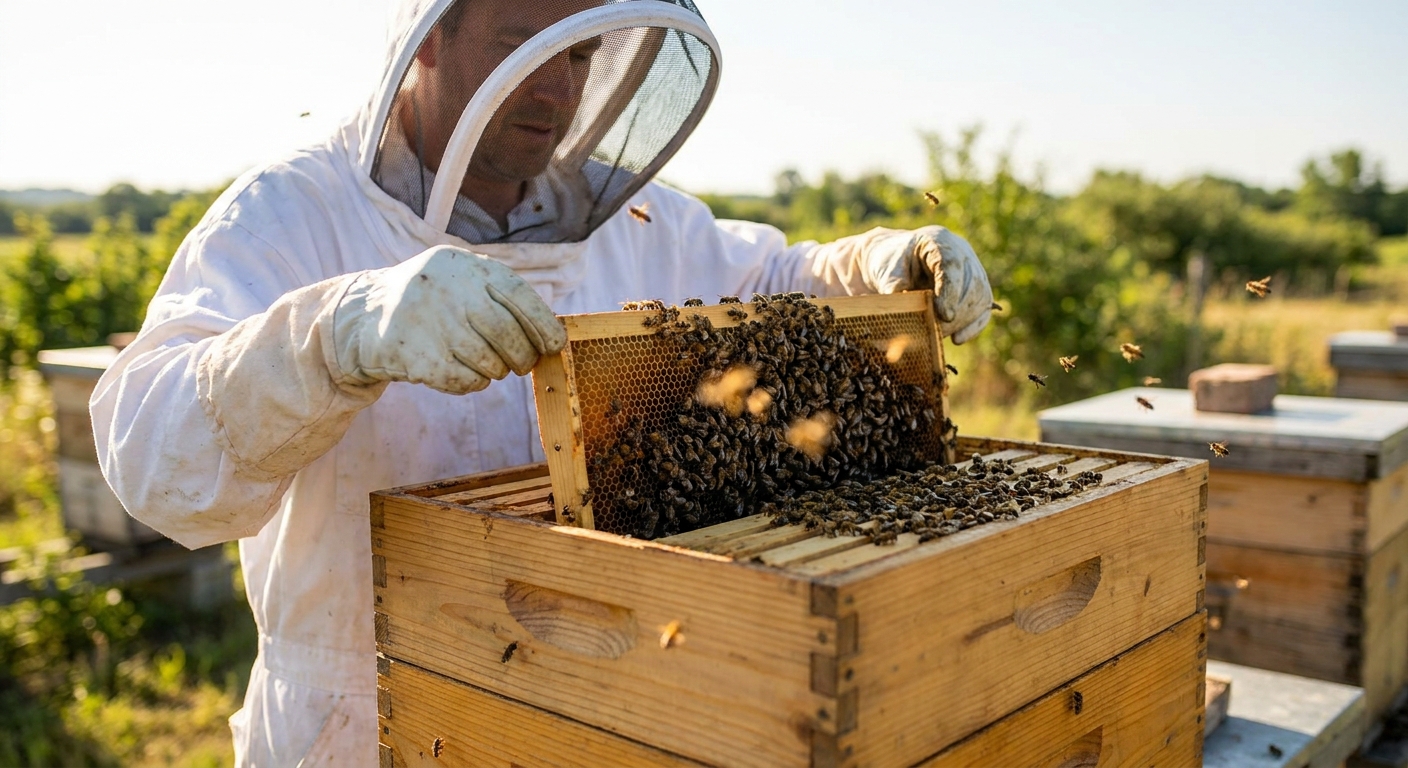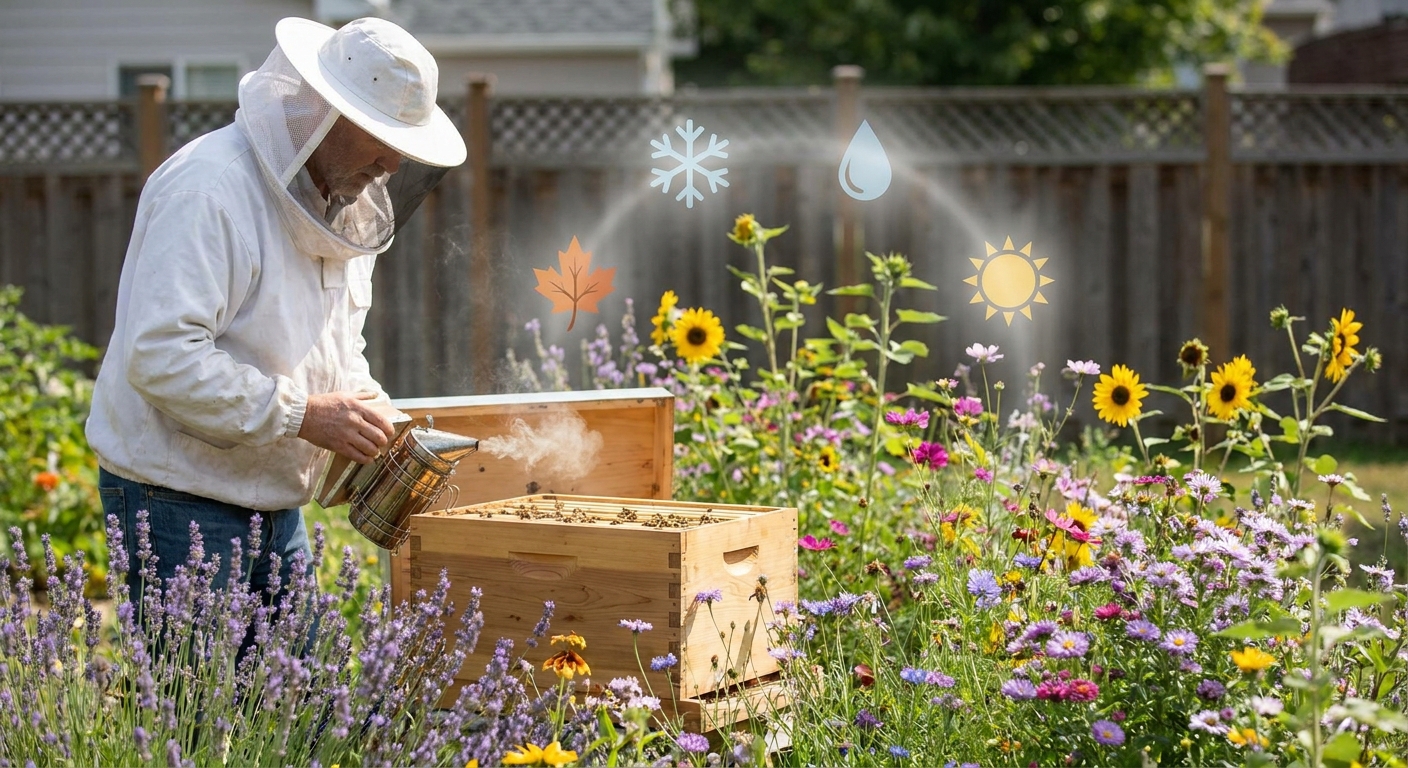
Healthy bees don’t happen by accident; they’re the result of dozens of small, timely decisions you make throughout the year. As a backyard beekeeper, you don’t need a commercial-scale toolkit or lab tests for every move—but you do need a clear rhythm.
Why Seasonal Bee Health Matters
Think of bee health as a year-long cycle:
- Spring: Build up and prevent swarming
- Summer: Support foraging and manage stress
- Fall: Prepare for winter and reduce disease pressure
- Winter: Keep colonies alive with minimal disturbance
Below is a hands-on, season-by-season guide grounded in real-world backyard beekeeping—what to look for, what to actually do on inspection day, and how to troubleshoot gently.
A Quick Look at Honeybee Biology (So Inspections Make Sense)
Before we go season by season, it helps to anchor what "healthy" means in bee terms.
A thriving colony usually has:
- A laying queen: Eggs in single cells, usually one egg per cell; larvae in all stages; brood pattern mostly solid.
- Balanced population: Enough young nurse bees to care for brood and enough foragers to bring in nectar and pollen.
- Good stores: Honey and pollen near the brood, not just in the corners.
- Calm demeanor: Some defensive behavior is normal, but extreme aggression can mean queen issues or robbing.
Bees are experts at maintaining brood nest temperature, managing hive humidity and ventilating moisture. Your job is to make sure you’re not accidentally working against them—and to step in where they can’t.
Spring: Building a Strong, Healthy Start
Spring inspections set the tone for the entire year.
Key Health Goals in Spring
Confirm the colony survived winter in good shape
Assess the queen and brood pattern
Make sure food stores bridge the gap until nectar flow
Prevent stress from overcrowding and swarming
What to Look For on a Spring Inspection
- Brood pattern: Solid sheets of capped worker brood with few empty cells is ideal.
- All life stages: Eggs, young larvae (white “C” shapes), and capped brood.
- Food: At least a few frames of honey and visible pollen.
- Deadouts: Hives that didn’t make it—important to inspect for disease signs before reusing equipment.
Hands-On Spring Actions
- Feed if needed: If stores are low, offer 1:1 sugar syrup and a pollen substitute patty until natural forage is abundant.
- Reverse boxes (if appropriate): In Langstroth hives, bees often move up over winter. Swapping boxes (brood above, empty below) can give the queen more room to lay. Only do this when temps are consistently mild.
- Add space ahead of the bees: Add a new box when the current brood box is ~70–80% full of bees and comb.
- Early mite checks: Don’t wait until late summer. Use an alcohol wash or sugar roll to get a baseline Varroa level.
Gentle Troubleshooting in Spring
- Spotty brood pattern: Could be an older queen, disease, or chilled brood. Check for sunken or perforated cappings and foul odors (signs of brood disease). If not diseased, consider requeening.
- No eggs or young larvae: The queen may be failing or absent. Give them a frame of fresh eggs from another hive if you have one—this lets them raise a new queen and buys you time.
Summer: Keeping Healthy Colonies from Burning Out
Summer is when colonies are at their peak—but also when stress can quietly build. Heat, mites, and a waning nectar flow can strain even strong hives.
Summer Health Priorities
Manage Varroa mites before they explode
Prevent starvation during dearths
Maintain good ventilation and protect against overheating
Watch for robbing and colony stress
What to Look For in Summer
- Lots of bees and capped brood
- Crowded honey supers and active foraging
- Bees bearding on the front in the evening (common in heat, not always a problem)
- Varroa signs: Deformed wings (DWV), spotty brood, dwindling population despite good forage
Hands-On Summer Actions
- Monitor mites regularly: Every 4–6 weeks, do a mite count. Treat if above your chosen threshold (often 2–3 mites per 100 bees in spring, lower in late summer before winter bees are raised).
- Ensure ventilation: Slightly propping the inner cover, using screened bottom boards, or adding an upper entrance can help with airflow.
- Watch food levels during dearth: A hive can starve in July/August even after a strong spring flow. If weight drops and few flowers are blooming, feed.
- Minimize disruptive inspections: Work quickly, gently, and avoid tearing apart the brood nest during the hottest part of the day.
Gentle Troubleshooting in Summer
- Aggressive behavior: Could be genetics, queenlessness, or robbing. Check for eggs and young larvae. Look for bees fighting at the entrance (robbers) versus just general defensiveness.
- Bearding vs. swarming: Bearding bees hang out in a loose curtain outside; they come and go calmly. Swarm prep involves queen cells (often along bottom of brood frames), reduced laying, and congestion inside.
Fall: Setting Up for a Healthy Winter
Fall is when you build the colony that actually survives winter. Winter bees live longer and must be raised in a low-mite, well-fed environment.
Fall Health Priorities
Get mite levels as low as possible
Consolidate brood and honey
Ensure sufficient food stores
Protect from moisture, pests, and robbing
What to Look For in Fall
- A still-laying queen, but with brood gradually tapering
- Heavy boxes: Most temperate climates need 60–90 lbs (27–40 kg) of stores per colony—check local guidance.
- Tight brood nest surrounded by food
Hands-On Fall Actions
- Treat for Varroa: Time treatments so they’re effective before the last rounds of winter bees are raised. Follow label directions exactly.
- Equalize colonies (if you have more than one): Swap frames of emerging brood or bees from strong hives to weaker ones to balance them, as long as both are healthy.
- Reduce entrances: Smaller entrances help bees defend against robbing and wasps.
- Check for queen issues: Poor laying pattern, lots of drones late in the season, or no eggs may mean you need to requeen, if timing allows.
Gentle Troubleshooting in Fall
- Light colonies: If boxes feel light when tipped, begin feeding 2:1 sugar syrup to build stores. In colder climates, leave enough time for bees to ripen the syrup before freezing temps.
- Brood but few bees: Might be a sign of high mite load or queen issues. Combine very weak colonies with stronger ones only if both appear disease-free.
Winter: Helping Bees Help Themselves
In winter, your main bee-health job is restraint. The colony clusters to keep warm, eating through stores as they slowly move.
Winter Health Priorities
Prevent starvation and moisture buildup
Avoid unnecessary disturbance
Watch for signs of trouble from the outside
What to Look For (Without Opening the Hive)
- Flight on warm days: Cleansing flights are normal when temps allow.
- Sound: A gentle buzz when you put your ear to the side can be reassuring.
- Dead bees at the entrance: A small pile is normal; it’s housecleaning.
Hands-On Winter Actions
- Insulate if needed: In cold regions, wraps or insulated covers can reduce temperature swings. Always keep ventilation openings clear.
- Add emergency feed: If a colony feels light mid-winter, add a sugar brick or fondant above the cluster.
- Tilt the hive slightly forward: This lets condensation and any water exit instead of pooling inside.
Gentle Troubleshooting in Winter
- No visible activity on a mild day: Could mean the colony died or is very small. Don’t open in harsh weather; wait for a truly mild day and check quickly.
- Moisture stains or mold: Usually a ventilation issue. Add an upper entrance and ensure the inner cover has a vent hole.
Simple, Low-Stress Hive Inspection Routine
You don’t need complicated checklists. A calm, consistent routine works wonders.
On each inspection (season-adjusted, of course), ask:
Queenright?
- Do I see eggs or very young larvae?
Brood pattern?
- Is it mostly solid, with few random empty cells?
Food?
- Is there enough honey and pollen near the brood?
Space?
- Do they have room to expand or store nectar?
Pests and disease?
- Any varroa, chalkbrood, foulbrood signs, or wax moth damage?
Move slowly, use just enough smoke, and stop before the bees clearly tell you they’ve had enough.
Encouragement for the Backyard Beekeeper
You will make mistakes. Every experienced beekeeper has lost colonies, missed a swarm cell, or mistimed a treatment. Bee health is not about perfection—it’s about paying attention, learning, and adjusting.
If you:
- Check your colonies regularly (but not obsessively)
- Keep mite levels low
- Make sure they never starve
- Respect their seasonal rhythms
…your bees will do the rest. They are remarkably capable partners.
And that’s the real heart of bee health: a quiet, ongoing partnership between you and a superorganism that already knows how to thrive—you’re simply helping them do it in your backyard.